
Air-raid alerts and explosions are a constant in Kyiv and other Ukrainian cities. Russian forces attack Ukraine day and night, and we see the results every day — deaths, destruction, and pollution. But that's not all. What happens to our hearing when we're exposed to explosions, especially nearby? Rubryka explains what acoustic trauma is and how to protect your ears.
What's the problem?
Ears plugged after the explosions
On the night of July 6, Russian forces launched another massive combined attack on Ukraine. Vyshneve, a city outside Kyiv, was hit particularly hard. After the Russian attack, ammunition at a warehouse nearby detonated.
During the air raid, Kristina sheltered with her neighbors on the ground floor because her apartment complex had no shelter. After the all-clear, she went back upstairs. She had barely climbed into bed when another barrage began.
"It didn't sound like a direct strike, but the first big explosion shook the building so hard that it threw me out of bed," Kristina recalls. "It stunned me, and my ears immediately felt plugged." I ran into the hallway to go back down to the ground floor because I didn't understand what was happening. The only message in the news had been, 'Kyiv and the region — all clear, everything is fine.'"
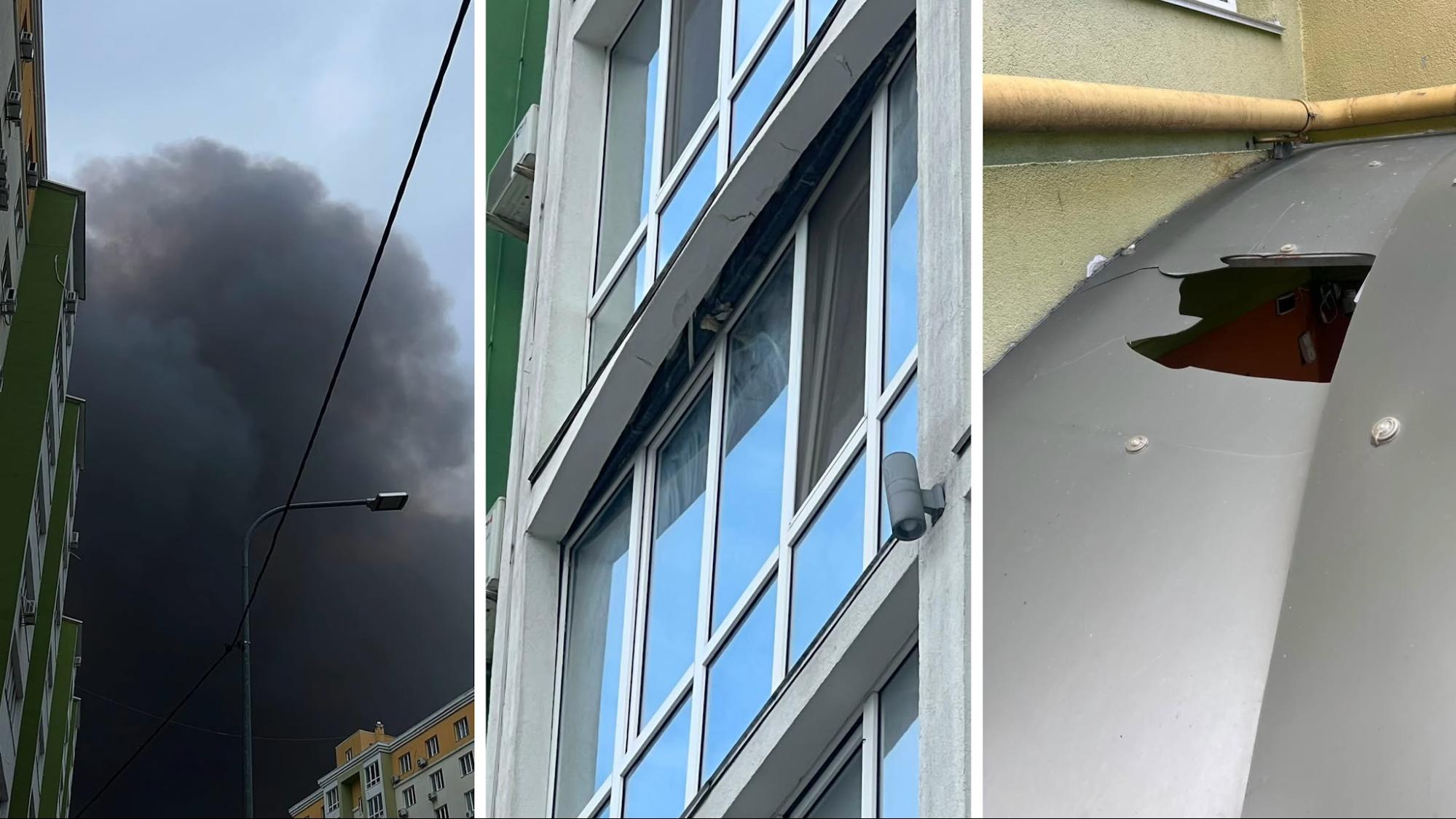
Aftermath of the explosions in Vyshneve. Photo courtesy of Kristina, the city's resident
Several more loud blasts went off, and each one made her ears feel more plugged.
"All the neighbors were already downstairs. Plaster was falling on our heads. Someone was screaming, someone was crying. Everyone was panicking because, again, nobody had said what was happening. People with cars started leaving the residential complex. Some offered us a ride, but we were too scared even to move," Kristina says.
Afterward, Kristina noticed that her ears still felt blocked. For several days, it felt like something was pressing against her eardrums from the inside, and her hearing wasn't as clear. On the fifth day, the pressure finally went away, but sharp pains started shooting from her ears into her jaw.
What's the solution?
"You have to act immediately"
At first, Kristina wasn't planning to see a doctor. She thought she would wait a week, and it would go away, but she wasn't getting better. Eventually, she messaged an ENT doctor, who told her that "there is very little time left. You need to act right now."
The doctor prescribed medication right away while she waited for her appointment. During the examination, they discovered that both of her eardrums had ruptured.

Kristina suffered acoustic trauma in the explosions. Photo courtesy of Kristina
"Somehow, they healed and closed up. A thick scar was left on my eardrums. I took a hearing test, and it showed some changes. Nothing serious, but they were there. I finished treatment, and 10 days later, we did another test. By then, my hearing was back to normal," Kristina says.
Kristina says she still feels the effects of the acoustic trauma: "Not in my ears, but in my head. After that hellish night, I can't sleep until 3 a.m., even when everything is quiet. I'm always waiting for something to happen. Ballistic missiles travel fast, and sometimes explosions happen before the air-raid alert. I sit there dressed, with the doors open, ready to run downstairs."
Kristina advises Ukrainians to protect their ears during air raids and, if an explosion leaves you stunned, to see a doctor for a checkup. "Don't wait. I started treatment in time, and it saved my hearing," she says.
Rubryka spoke with two specialists about the dangers of acoustic trauma: adult and pediatric ENT doctor Oksana Kirkova and neurologist and physical and rehabilitation medicine doctor Anastasiia Ivanitska.
How does it work?
What is acoustic trauma?
A powerful explosion can damage your hearing in seconds. The human ear isn't built to handle sounds that intense, and the blast wave puts additional stress on the auditory system. After an attack, people may experience plugged or painful ears, ringing or other noise, or reduced hearing. Doctors call this hearing damage acoustic trauma, also known as acoustic or blast-related ear injury. The effects can be temporary or permanent.
"A blast wave travels faster than the speed of sound, creating sudden compression and expansion of the air. That process is what damages the body's tissues," says ENT doctor Oksana Kirkova.
An explosion lasts only a split second, but that's long enough to cause serious damage. First, the pressure shoots up. Then, almost instantly, it drops just as fast. These sudden changes are especially dangerous for organs that contain air.
The organs most affected include:
- Eardrums
- Tiny bones in the middle ear
- A cochlea in the inner ear
- Lungs
- Sinuses
The effects of an explosion don't stop there. The blast wave can hurt your brain as well as your hearing. Even if nothing hits your head, it can still cause tiny injuries to nerve cells. That's why an explosion can cause more than hearing problems. You may also get headaches, have trouble focusing or remembering things, or notice changes in your mood.
"Many people are briefly stunned after an explosion. That's a normal reaction. But some symptoms can point to a more serious injury," the doctor says. She lists:
- Ringing in the ears
- Sudden hearing loss
- A blocked feeling in the ear
- Blood or clear fluid coming from the ear
- Severe headache
- Nausea
- Vomiting
- Dizziness
- Trouble walking steadily
- Double vision
- Drowsiness
- Confusion
- Short-term memory loss
- Trouble concentrating
- Emotional instability
Symptoms that don't improve or that gradually worsen are especially concerning.
"The golden window": Why you need to see a doctor

ENT doctor Oksana Kirkova. Photo courtesy of Kirkoka
Symptoms of blast-related ear injuries may not show up right away. That's one of the tricky things about them. The explosions stop, and you may feel fine. Hours later, or even the next day, you might start having ringing in your ears, headaches, trouble sleeping, forgetfulness, or increased irritability.
That's because some of the body's responses develop gradually. For this reason, doctors recommend getting checked after an explosion even if you don't have serious symptoms right away.
Kirkova stresses that the first 24–48 hours after acoustic trauma are critical for saving your hearing.
She explains that a lack of oxygen and blood vessel spasms can cause the auditory nerve and delicate hair cells in the inner ear to begin dying permanently within the first day after the injury. If treatment doesn't begin in time, sudden hearing loss can progress to chronic sensorineural hearing loss. Medication can no longer reverse it; hearing aids or other hearing devices may be the only option.
A damaged eardrum also gives bacteria a direct path into the middle ear. Without medical care, this can lead to a serious middle-ear infection and severe complications involving the membranes around the brain and spinal cord.
When you need to see a doctor immediately:
- Sudden hearing loss
- Blood or clear fluid coming from the ear
- Repeated vomiting
- Severe headache
You may need to see a neurologist as well as an ENT after an explosion

Neurologist Anastasiia Ivanitska. Photo courtesy of Ivanitska
"After an explosion, it's important to distinguish between acoustic trauma and a traumatic brain injury," says neurologist and physical and rehabilitation medicine doctor Anastasiia Ivanitska. "Acoustic trauma affects the hearing system, so an ENT plays the key role in diagnosing and treating it. You need a neurological evaluation if you develop headaches, dizziness, balance problems, vision problems, memory or concentration problems, sleep problems, or changes in behavior."
Blast-related ear injury is a complex injury caused by the blast wave. It can damage not only the ears but also the brain. A concussion can happen even without a visible wound or loss of consciousness. At the same time, the doctor points out that simply being near an explosion does not automatically mean you have suffered a traumatic brain injury. Doctors make that diagnosis based on what happened, the symptoms, and the physical exam.
After a mild traumatic brain injury, people may have headaches, nausea, dizziness, trouble keeping their balance, sensitivity to light or noise, vision problems, and fatigue. They may feel like their thinking is slower or have trouble focusing or remembering things. They may also feel irritable or anxious, become more emotional, or have trouble sleeping. Some symptoms show up right away. Others may not appear for hours or even days.
An acute stress reaction is also common after attacks. It can cause fear, tension, easy startle, insomnia, intrusive memories, or a feeling that what is happening isn't real.
"Headaches, dizziness, sleep problems, and trouble concentrating can happen with both a stress reaction and a mild traumatic brain injury. The two can also happen at the same time. So don't assume it's 'just stress,' if you develop neurological symptoms after an explosion," the neurologist says.
Until you see a doctor, don't drive or return to sports. Don't drink alcohol, put anything in your ears on your own, take sedatives, so-called "blood-flow" or nootropic drugs, or get IV infusions. Using cotton swabs or trying to "clean out" your ear after an explosion is especially dangerous. It can worsen a damaged eardrum.
Call an ambulance immediately if your headache gets worse or doesn't go away, or if you have repeated vomiting, seizures, weakness or numbness in your limbs, trouble speaking, or problems with coordination. Other warning signs include loss of consciousness, increasing drowsiness, confusion, unusual behavior, unequal pupil sizes, or difficulty waking up. Emergency medical care is also needed if the person's condition is rapidly getting worse or they have a serious combination of injuries.
Will it really work?
Will your hearing come back after treatment?
Treatment for blast-related ear injury is often complex and should be prescribed only by doctors — an ENT and a neurologist. If the eardrum has a large tear and doesn't heal on its own over several weeks or months, a surgeon can repair it.
In general, patients should give their ears a complete break from loud sounds. Stay away from noisy places, headphones, and loud music. Your ears need total quiet.
"Long-lasting ringing in the ears, or tinnitus, and the effects of a concussion can often cause insomnia, anxiety, and depression. Working with a therapist and undergoing physical therapy can help the nervous system adapt to chronic noise," adds Ivanitska.
Kirkova shares a case from her own practice. After one of Russia's attacks on Odesa, a patient came to see her. She had been near the blast and had the classic signs of acoustic trauma: blocked ears, intense ringing, and the feeling that the world around her had suddenly gone "deaf."
The patient sought help in time, which proved crucial for saving her hearing. During the initial examination, doctors performed an audiogram — a hearing test that measures how well a person hears at different frequencies. The test showed a clear pattern of blast-related ear injury: a major drop in hearing at high frequencies, which a blast wave usually damages first. Because the injury was still in its acute stage, doctors immediately prescribed an intensive course of medication.
The treatment lasted five days. During that time, the patient followed the doctor's instructions and avoided loud sounds. On the sixth day, they repeated the hearing test. The results were better than expected: everything was normal, and her hearing had fully returned.
Even more helpful solutions!
How can you reduce the impact of an explosion?
Acoustic trauma is much more likely in an enclosed space — an apartment, basement, or parking garage — than outdoors. Concrete walls reflect the blast wave, creating an "acoustic mirror" effect: sound and pressure waves bounce back and become stronger.
That's why doctors recommend using hearing protection during attacks. For soldiers, medics, and volunteers, it is especially important to have electronic hearing protection or specialized tactical earplugs with filters. These devices automatically block dangerous peak sounds while still allowing you to hear speech.
If you don't have special ear protection, try the "open-mouth" technique: when an explosion occurs, relax your jaw, open your mouth slightly, and cover your ears tightly with your hands. This lets air move through the Eustachian tube from your throat to your middle ear and helps balance the pressure on both sides of your eardrum.
If you're outdoors, lie face down and cover your head with your arms. Physical barriers — even a curb or a depression in the ground — can reduce the force of a direct blast wave.
Indoors, follow the "two-wall" rule. The first wall takes most of the hit. The second helps shield you from debris and softens the pressure wave. During an air raid, leave your windows cracked open. This lowers the chance of glass flying into the room, and blasts a wave away through, reducing the pressure spike.