
A real forest has grown on the exposed bed of the former Kakhovka reservoir. Migratory fish are returning to Zaporizhzhia, the large city on the Dnipro in southeastern Ukraine, downstream from the destroyed dam. New wetlands are drawing birds. Scientists say this does not lessen the scale of the disaster, but it does give reason to rethink the future of the area.
What's the problem?
More than just a new ecosystem at the Kakhovka Reservoir site
On June 6, 2023, Russian forces blew up the dam of the Kakhovka hydroelectric power plant. The blast triggered a humanitarian, environmental, and infrastructure disaster all at once. Floodwaters swallowed towns and villages, farmland, homes, businesses, and infrastructure across southern Kherson and Mykolaiv regions. In all, 612 square kilometers went underwater, putting about 16,000 people in 80 communities in the flood zone. The current also swept debris from destroyed buildings, along with waste from industrial sites, farms, cemeteries, animal burial pits, and sewage pits, into the Dnipro River and the Black Sea.
At the same time, more than 70% of the reservoir's water drained out. Within just 17 days, most of the reservoir bed was dry. The disaster split in two: downstream areas were hit by sudden flooding, while upstream areas lost a vast artificial lake and saw decades of submerged land laid bare.
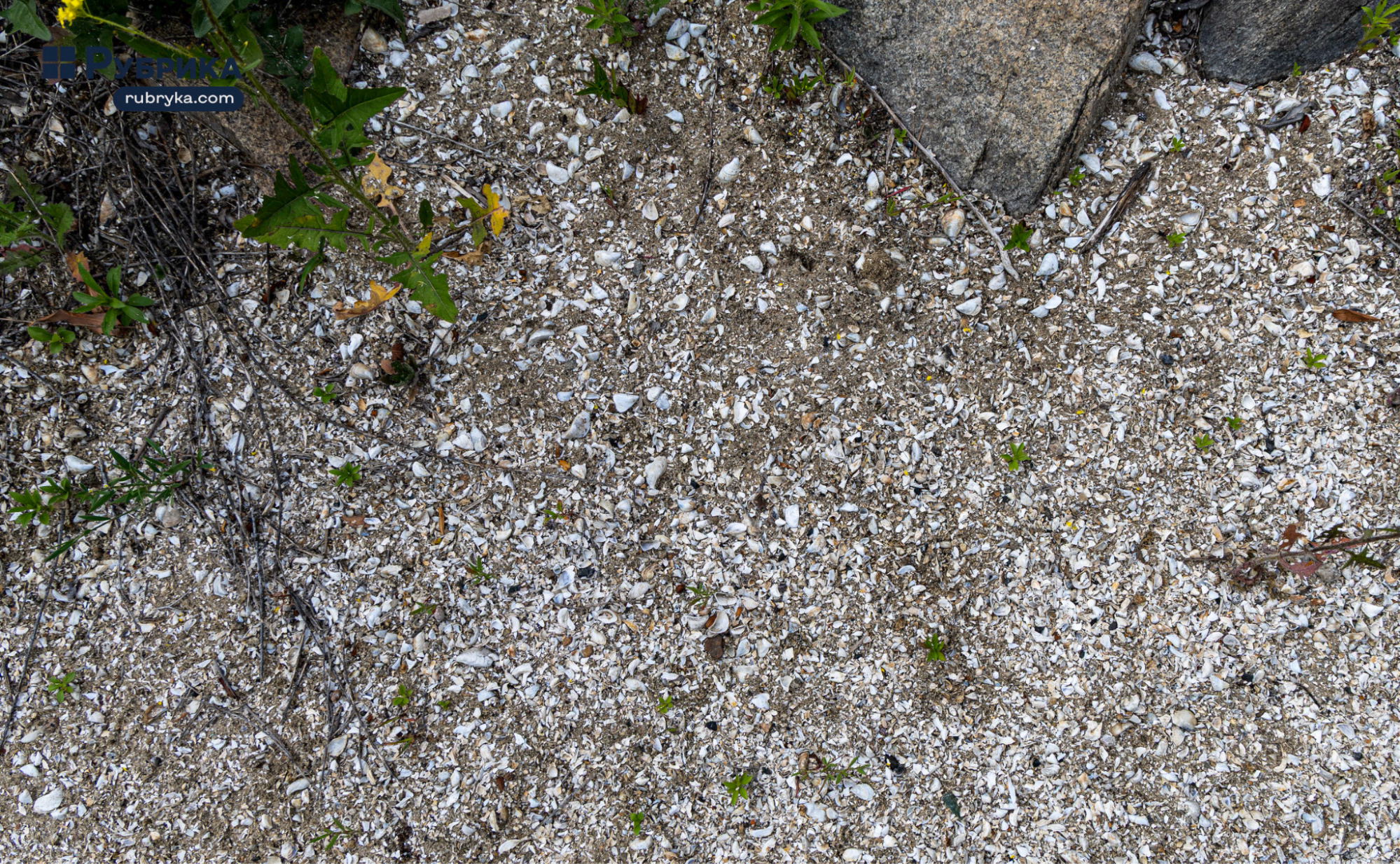
The exposed bed of the Dnipro near Khortytsia Island in Zaporizhzhia became a hotspot for archaeologists and treasure hunters. Researchers are studying the area; some historical finds have already made their way to museums. Photo credit: Viktoriia Hubareva
In the first weeks after the disaster, scientists feared the reservoir bed would turn into a desert. They thought the dried silt would blow into dust, spark dust storms, and carry off pollutants that had built up in the sediments for years. They also worried invasive plants — black locust, false indigo bush, honey locust, and other aggressive species — would quickly move in and choke out native ecosystems.
In the end, those fears did not come true. The right mix of conditions and timing sparked the rapid growth of trees and plants, especially willows and poplars, across the former reservoir bed, but that did not mean the problem was solved. It raised a more complex question: what is actually forming where the reservoir once was? How will this ecosystem change in five, ten, or fifty years? And how can people avoid wrecking it with rushed decisions based on first impressions?
The effects went beyond the Kherson region, where the Kakhovka dam stood. The southern part of Khortytsia Island and the Zaporizhzhia stretch of the Dnipro were also part of the Kakhovka Reservoir. As water levels dropped, sandbars, old hydraulic structures, and stretches of the former reservoir bed surfaced. Bird nesting sites shifted. Animal migration routes changed. Fish faced new conditions. Areas that had once been islands or submerged by several meters of water became accessible to people.
Environmental change is only part of the story. Communities now face water shortages. Poaching has grown more likely. The Dnipro's water level keeps fluctuating due to upstream hydropower plants and Russian bombardment. Landmines are still a threat. So the dam's destruction has led to the creation of far more than one new ecosystem. It has set off a tangled chain of changes that no single expedition can fully capture.
What's the solution?
Work of many scientists
Ukrainian scientists responded to that uncertainty with systematic, interdisciplinary monitoring. After the disaster, researchers from the Ukrainian Nature Conservation Group (UNCG) and the Ukrainian Botanical Society teamed up to track changes across the former reservoir. The team includes biologists, botanists, geobotanists, ecologists, wildlife experts, and conservation staff.
Ivan Moisiienko, Anna Kuzemko, Yakiv Didukh, Oleksii Vasyliuk, and other scientists head out to the former reservoir several times a year. They set up research plots, measure trees, identify plant species, and track how conditions change from season to season and year to year.

Mykhailo Mulenko, acting head of the Nature Protection Sector at the Khortytsia National Reserve and a biologist based in Zaporizhzhia, stands among young trees that sprang up along the exposed banks of the Dnipro after the Kakhovka dam was destroyed and water levels fell. Photo credit: Viktoriia Hubareva
In Zaporizhzhia, this monitoring happens every day. Rubryka visited Mykhailo Mulenko, acting head of the Nature Protection Sector at the Khortytsia National Reserve. He says reserve staff can monitor these changes at all times, not just on field trips. They log observations, photograph animals and plants, record bird calls, use camera traps, and talk with fishers, fish protection officers, and environmental inspectors.
This approach widens the scope of what research can be. Data can start with a field measurement, an archive record, a fisherman's TikTok video, or a report of an unusual catch. But before scientists can trust an observation, they have to verify it. They pin down the location, take photos, measure the specimen, identify the species, check historical sources, and look for repeat sightings.
Scientists are careful with their words. Mulenko does not call what is happening at the former Kakhovka Reservoir a full return of the Great Meadow, a historic ecosystem that existed before a chain of dams regulated the Dnipro.
"This is something new that only vaguely resembles the Great Meadow. I call it the Kakhovka Forest: there was a reservoir, now there's a forest," Mulenko says.
The solution, then, is not to rush in and "develop" the exposed land or force it back into some imagined historical past. The first step is to collect enough data, allow natural processes to unfold, and use evidence to determine which areas need protection, which ones need intervention, and where the best course of action is to leave nature alone.
How does it work?
Why did the forest appear only once?
One of the biggest findings from the May expedition was a clearer answer to what sparked the mass tree growth in 2023. The water pulled back after the dam was destroyed, right when willows and poplars were releasing their fluffy seeds. The seeds fell onto the wet reservoir bed along the shoreline and sprouted almost at once. That is how the forest began.
According to researcher Oleksii Vasyliuk, as the water slowly receded, it left behind band after band of seeds. Each new wave dropped poplar fluff full of seeds, then pulled back from shore. That is why people in Zaporizhzhia and elsewhere now see neat belts of willow and poplar trees that look as if planted in rows by people, even though they grew on their own.
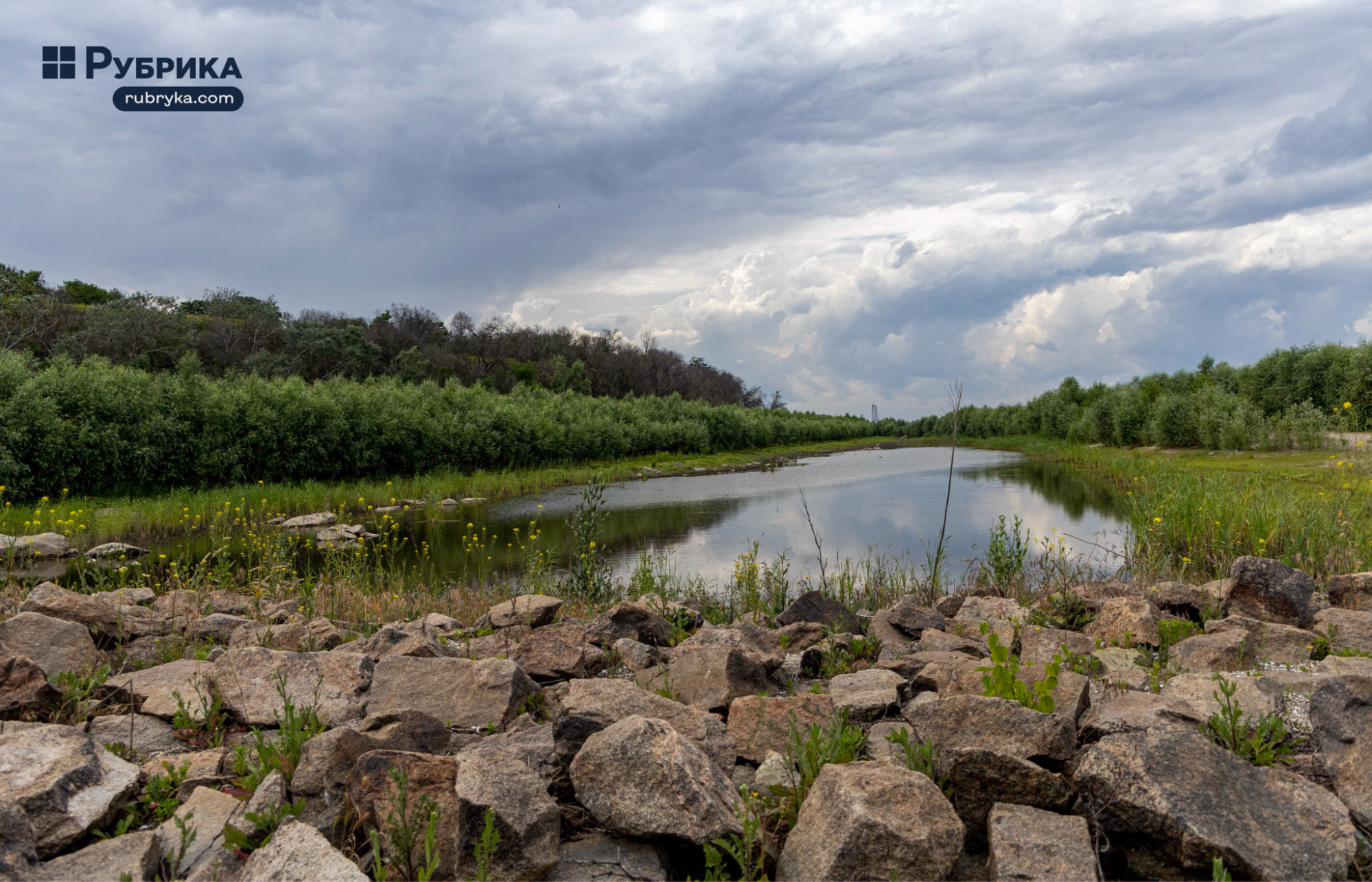
The strip of young trees on both sides of the water is part of the same Kakhovka Forest growing where water stood before the destruction of the Kakhovka dam. Photo credit: Viktoriia Hubareva
Scientists found the clearest proof in places where water stayed longer. By the time those areas finally dried up, the mass seed drop was already over. Three years later, no similar tree cover has grown there.
"If water was still there when the seeds were germinating, nothing grew after that. The process is crystal clear," says Vasyliuk.
This means the Kakhovka Forest cannot regrow at just any time. To repeat the process, conditions would have to match the end of the spring flood season, which in the Lower Dnipro region usually came in late May and early June. Today's forest came about by a rare coincidence: the water pulled back just as willow and poplar seeds were ready to spread. If the dam had been destroyed in autumn or winter, other plants would likely have moved in first, including invasive shrubs and trees whose seeds ripen later in the year.
In areas that dried out only at the end of summer, dense stands of annual Canadian horseweed came first. Later, Mulenko says, native herbs — sorrels and redshank — began to push it out. In other words, even where no forest took root, the plant cover keeps changing.
400 plant species in three years
At the start of the research, scientists assumed that the extraordinarily dense growth of young trees would not survive competition and that many would begin dying off. Some of the weakest trees did die after the first winter, but the larger trees kept growing stronger, and so far, the mass die-off researchers expected has not materialized.
In the first autumn after the disaster, young trees near Zaporizhzhia were only 70 centimeters to one meter tall in some places. Within a few years, many willows had reached five to seven meters. According to the latest measurements, Mulenko says, some were about 10 meters tall. Poplars, which initially looked weaker and stayed short longer, later began growing even faster than the willows.
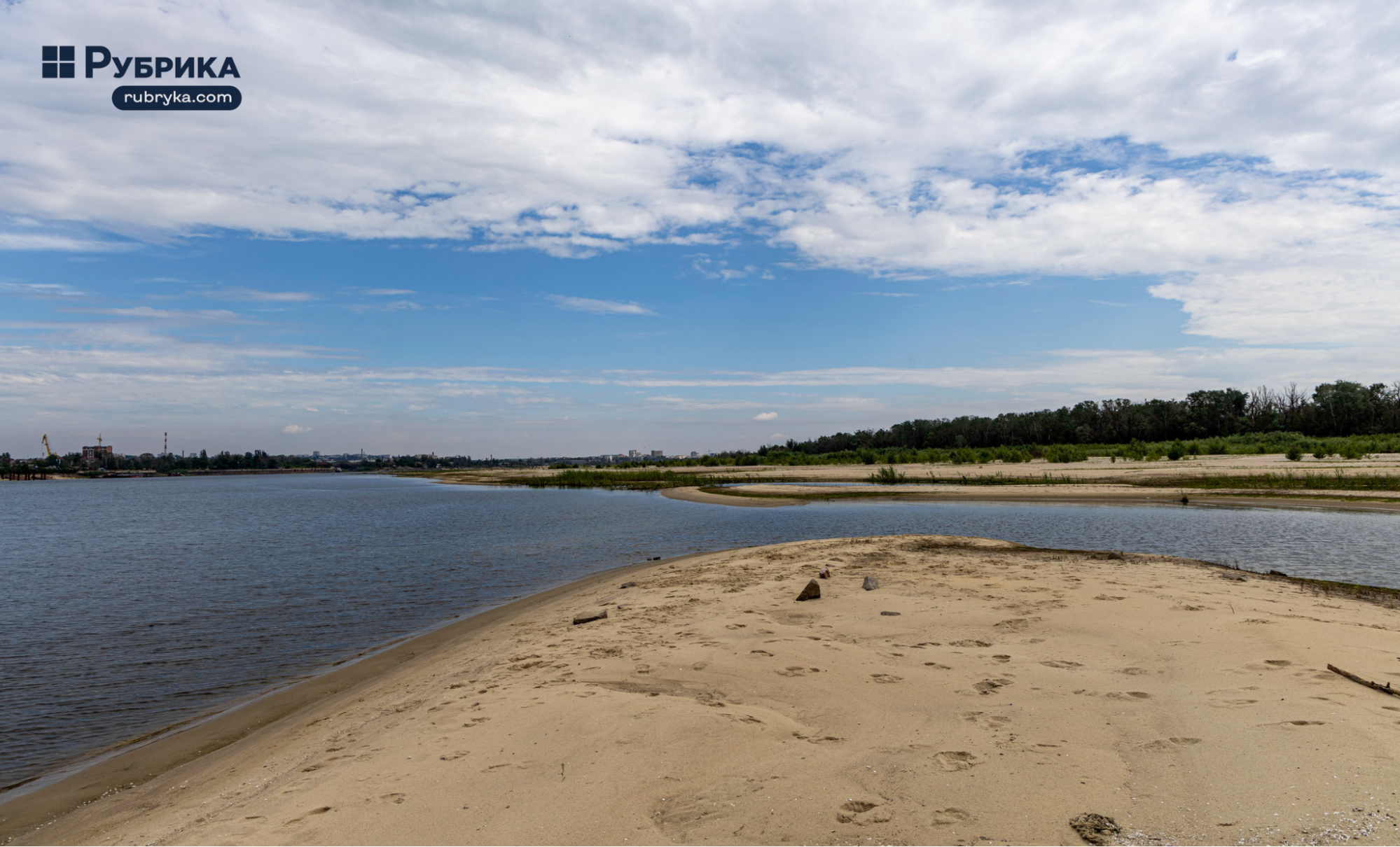


Before the Kakhovka dam was destroyed, these sandbars lay underwater. Today, they serve as recreation areas, fishing spots, and archaeological sites. Legally, however, they still have not been given a new official status. Photo credit: Viktoriia Hubareva
According to an estimate by botanist Ivan Moisiienko, a doctor of biological sciences, cited by Vasyliuk, researchers have now recorded about 400 plant species across the former reservoir. The growth has been dramatic. During the first expedition, three weeks after the dam was blown up, scientists found only ten species. By October 2023, they had documented 68. By May 2024, that number had climbed to 147.
"Biologically, this is a forest. Yes, it's overcrowded. Yes, it still contains relatively few tree species. But it's a forest," Vasyliuk says.
The legal status of the area remains unresolved. On the ground, it already functions as a forest; on paper, it is still just a technical reservoir.
As plant diversity grows, the rest of the ecosystem quickly follows suit. Certain insects depend on specific plants. Fallen leaves build a new organic layer, providing food for small invertebrates and microorganisms. The young forest is no longer just a mass of trees. It is becoming a living system with more and more ecological niches.
Birds, ponds, and wetlands
Small ponds and wetlands are another key finding from the May expedition. They store water, help sustain the forest during drought, provide drinking and hunting grounds for animals, and create opportunities for fish and invertebrates to colonize new habitats.
According to Mulenko, these wetland complexes are just as important as the growing forests. In one area, local fishers dismantled part of an old stone hydraulic structure to restore a surface connection between a pond and the Dnipro. Water could have filtered through the soil without the channel, but the open connection allows fish and invertebrates to move in, making the ecosystem more complex.
These ponds also help explain why bird numbers are increasing. Birds that once only passed over Zaporizhzhia or paused briefly now have places to feed and nest. Mulenko points to regular nesting by ruddy shelducks and the presence of swans. This year, he observed a colony of about 100 swans at one pond.

Mykhailo Mulenko recently photographed a great white pelican in the Khortytsia reserve. The species is listed in Ukraine's Red Book, an official national red list of threatened animals, and once lived in the region before the Kakhovka Reservoir was created. A single sighting, however, does not yet mean the species has permanently returned to breed. Photo credit: Mykhailo Mulenko
Two pairs of white-tailed eagles now nest regularly on Khortytsia Island, and each pair raises two chicks. However, not every species benefits from these changes. When the trees that had supported a long-standing heron colony died, the birds had to move elsewhere.
The young forest is well-suited to nightingales and other birds that build nests in branches. Vasyliuk says bird calls were so constant during the expedition that smartphones picked them up as a single wall of noise. The new forest still lacks the hollows woodpeckers, owls, and other cavity-nesting birds need, but over time, they may move in too.
Sturgeon and herring are returning to Zaporizhzhia
One of Mulenko's biggest discoveries was the return of fish that had long been unable to move freely through this stretch of the Dnipro. The first clue came when sturgeon began washing up stranded on the shore after sudden drops in water levels. Mulenko then started collecting reports from fish protection officers, environmental inspectors, and local fishers.
He first spotted another species in a social media video: a fisherman holding a bucket of herring caught in Balabyne Bay, about five kilometers downstream from Zaporizhzhia. Mulenko tracked him down, verified the catch site and conditions, got photos with a measuring scale, and then went out on patrols on Khortytsia to find more proof.
Today, Mulenko says, at least three sturgeon species have been recorded in the Zaporizhzhia stretch of the Dnipro. One herring species, the Black Sea shad, known locally as dunaika, was also confirmed.
Historical records showed just how big the shift was. In older Lower Dnipro fishing publications, Mulenko found that before the dams were built, Zaporizhzhia fishers hauled in 150 to 300 tons of shad a year. These sightings are not a fluke. They are a partial return to the fish's historic range.
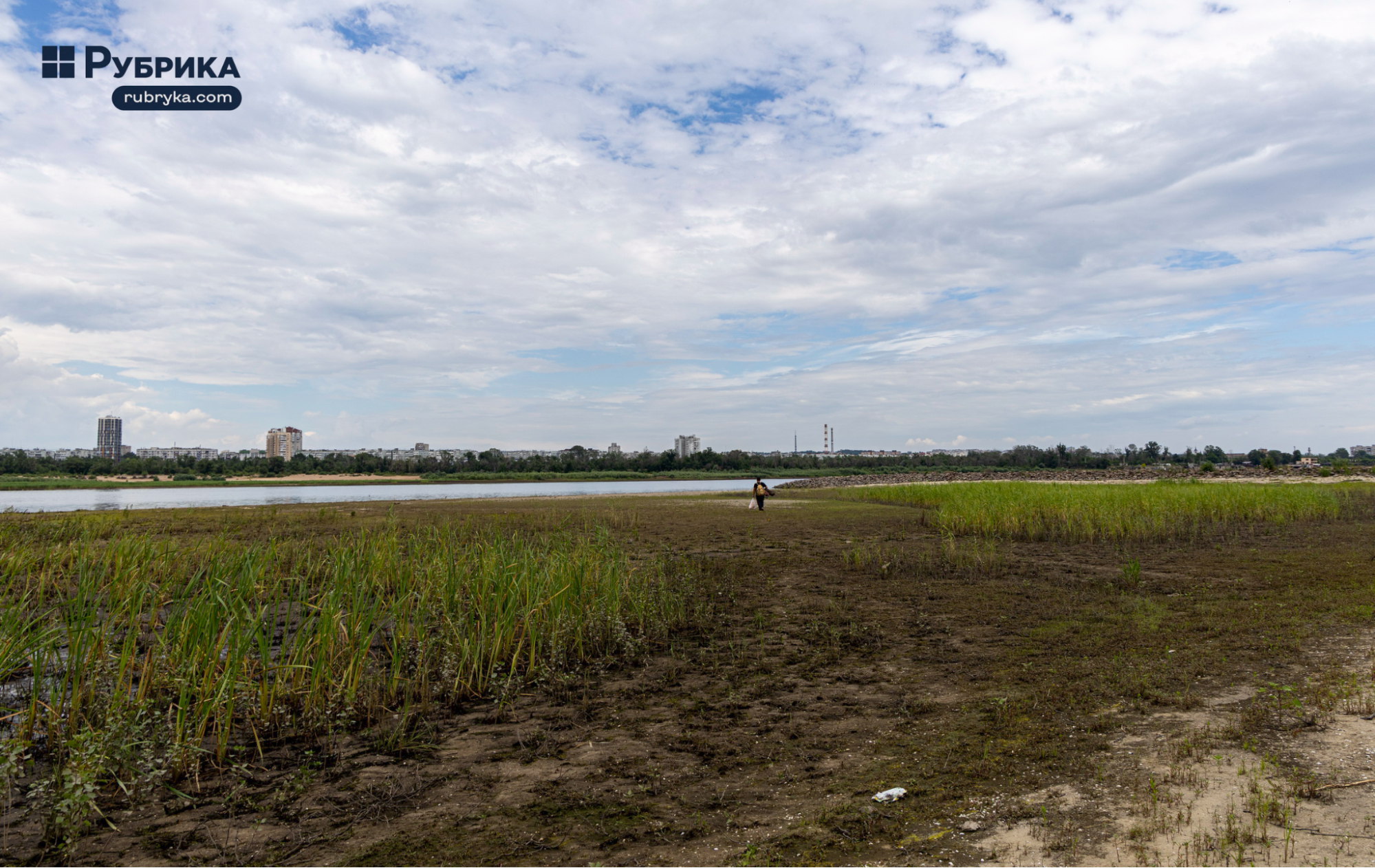
Part of the exposed reservoir bed near the Dnipro and Khortytsia Island, Zaporizhzhia. Photo credit: Viktoriia Hubareva
That does not mean commercial fishing can resume. Sturgeon are protected under Ukraine's Red Book, and herring catches remain tightly regulated. Fines range from 48,000 to 100,000 hryvnias (about 1,100 to 2,300 euros). Social media monitoring still shows a poaching risk. And even when fishers post videos of themselves releasing fish, there is no way to know the fish actually went back into the water.
At the same time, the Dnipro's sudden water swings create fresh hazards for fish. Mulenko recalls one case: the water dropped by about a meter, and a sturgeon nearly a meter and a half long was left stranded in the shallows. The people who found it froze, worried about fines, and called the police. Officers came, waded in, and pushed the fish back into deeper water.

Fishers in the Zaporizhzhia area. Photo credit: Viktoriia Hubarieva
Forest "highways" for roe and deer
On Khortytsia, roe deer and fallow deer now spend more time near the shoreline, drawn by the young willows. From the outside, the thickets look impenetrable, but reserve staff have mapped clear animal trails through them — what Mulenko calls wildlife "highways."
Mulenko has also documented a surge in badger numbers. Their tracks and camera-trap images now appear across the island. However, he stops short of calling it a direct result of the reservoir's disappearance. Wartime restrictions on public access to the reserve, along with other factors, may also have contributed.


Badgers on Khortytsia Island. Their population has surged in recent years, although scientists still do not know the primary reason. Photo credit: Yurii Bataiev
Mulenko thinks the growing number of jackals may be tied both to the war and to the new shoreline thickets. The reserve estimates about ten now live on the island. Hostilities farther south have pushed them north, and the thin brush along the water gives them exactly what they need: cover, shelter, and easy food — dead fish and birds.
Vasyliuk points to another challenge: in some stretches of the former shoreline, dense thickets, barbed wire, and military barriers can block the movement of large animals. Remotely laid mines remain a threat to wildlife and people alike.
Exposed reservoir bed revealed not only nature, but history
The drop in water levels exposed old hydraulic structures used for navigation long before the Kakhovka Reservoir existed. On the southern end of Khortytsia Island, a system of stone groins has reappeared. Built to steer the current, hold sand near the shore, and keep shipping channels clear, they were buried for decades. Researchers have also found coins and other early 20th-century artifacts nearby.
According to Mulenko, before the reservoir was built, the shoreline never stayed still, and sandbars kept shifting with the river. These structures held them in place and kept the channel open. When the Kakhovka Reservoir was created, some of them ended up under about five meters of water.

The structures pictured here were built to keep shipping channels from being buried by sand. After the Kakhovka dam was constructed, they disappeared underwater. Today, they are visible again. Photo credit: Viktoriia Hubareva
Historical records also help scientists compare today's vegetation with what was here before the flooding. Before the reservoir, much of the land was choked with nearly impassable willow thickets known as sheliuhy. Tall black poplars and oaks grew mostly along the main Dnipro channel and its side branches. The area teemed with mammals and wetland birds, including nightingales, reed warblers, ducks, and many others.
What scientists see today echoes those old descriptions in some ways. Yet researchers avoid making a direct comparison. This ecosystem is taking shape under different water conditions, in wartime, and in a river system still controlled by other Dnipro dams.
For Mulenko, that is another reason to look at the area as a whole. The dam's destruction affected both natural and cultural heritage. That is why reserve expeditions have covered multiple affected regions — Kherson, Dnipropetrovsk, and Mykolaiv — and why the findings are being gathered through Ukraine's Ministry of Culture and international programs.

Grass snake. Photo credit: Viktoriia Hubareva
Does it really work?
What does scientific research of the former Kakhovka Reservoir accomplish?
Now, researchers can see which predictions missed, which changes were one-offs, and which are still underway. They can compare ten plant species found in the first weeks after the disaster with about 400 three years later. They can compare one-meter saplings with trees ten meters tall. They can compare scattered reports of strange fish catches with repeat sightings, photos, and historical records.
The former reservoir bed did not become a vast dust desert. Willow and poplar thickets have survived several winters and now qualify biologically as forests.
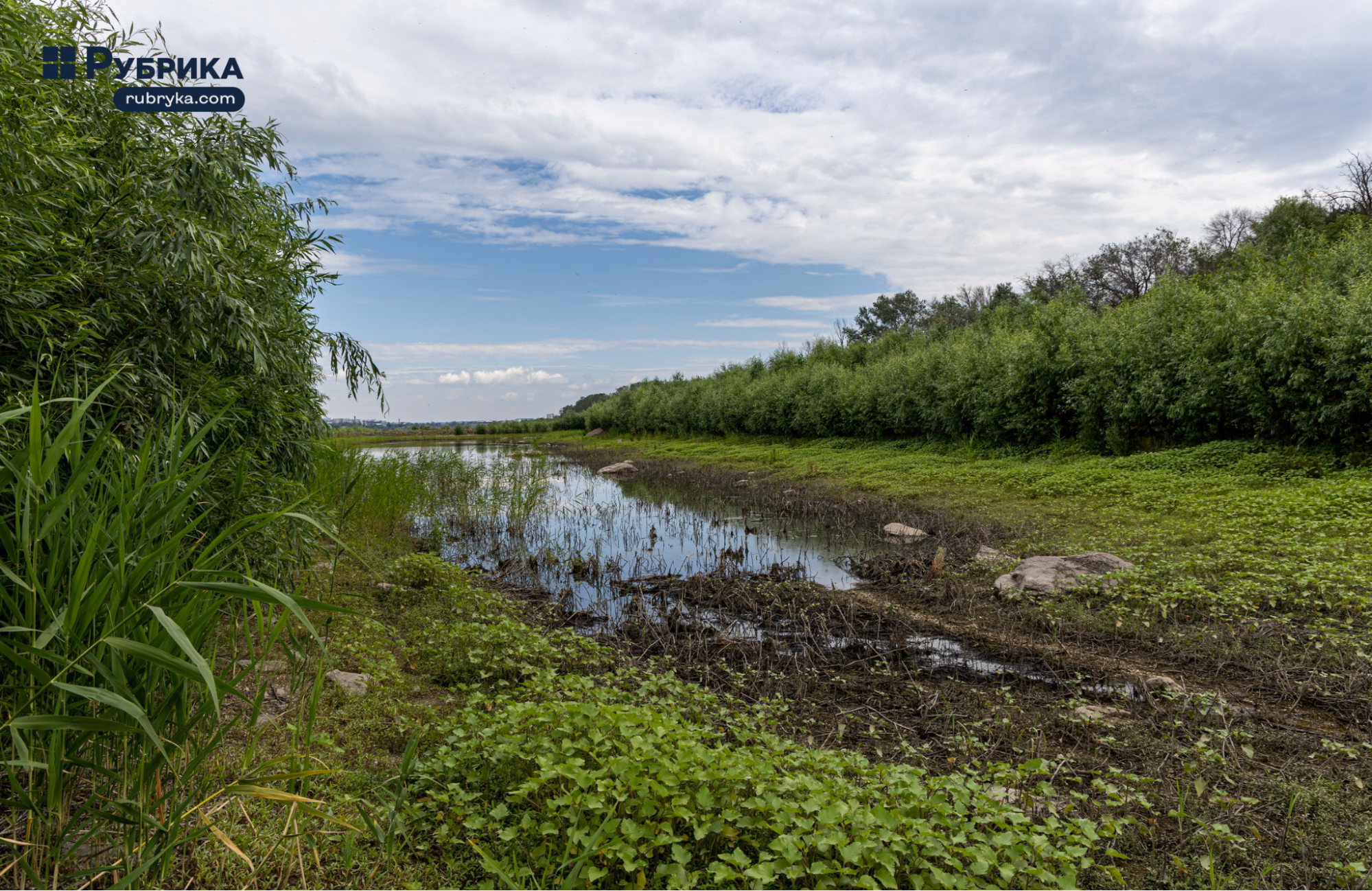
Wetland habitats are already forming in areas that were once underwater. Insects, waterfowl, forest birds, hoofed mammals, and predators are all using these new conditions. Migratory fish are once again reaching Zaporizhzhia. Photo credit: Viktoriia Hubareva
But that does not mean all the consequences of the disaster are positive, or that nature has "healed itself." The new forest does not bring back flooded homes, destroyed infrastructure, lost protected areas, or damaged water-supply systems. It is not a replica of the historic Great Meadow. Some species have lost their traditional habitats, while others are only beginning to move in.
The monitoring itself also has serious limits. Landmines, the proximity of the front line, drones, and other security risks prevent researchers from freely exploring the entire area. They cannot safely push deep into the thickets or travel through every channel. On Khortytsia, surveys are often conducted on foot because drone use is restricted. The true number of species and the full scale of ecological change may be greater than current records show.
Not all cause-and-effect relationships are clear yet. The rise in badger numbers may have coincided with the disappearance of the reservoir, but was actually driven by other factors. The recovery of wild boar populations on Khortytsia began after an outbreak of African swine fever and was aided by migration from other riverbanks, so scientists cannot automatically link it to the Kakhovka disaster.
The future of the forest itself remains uncertain. The extraordinarily dense growth will have to thin naturally over time. Vasyliuk expects that some trees will die. The young forest also lacks mature trees and nesting cavities, which means it still cannot support the full range of species found in older forests.
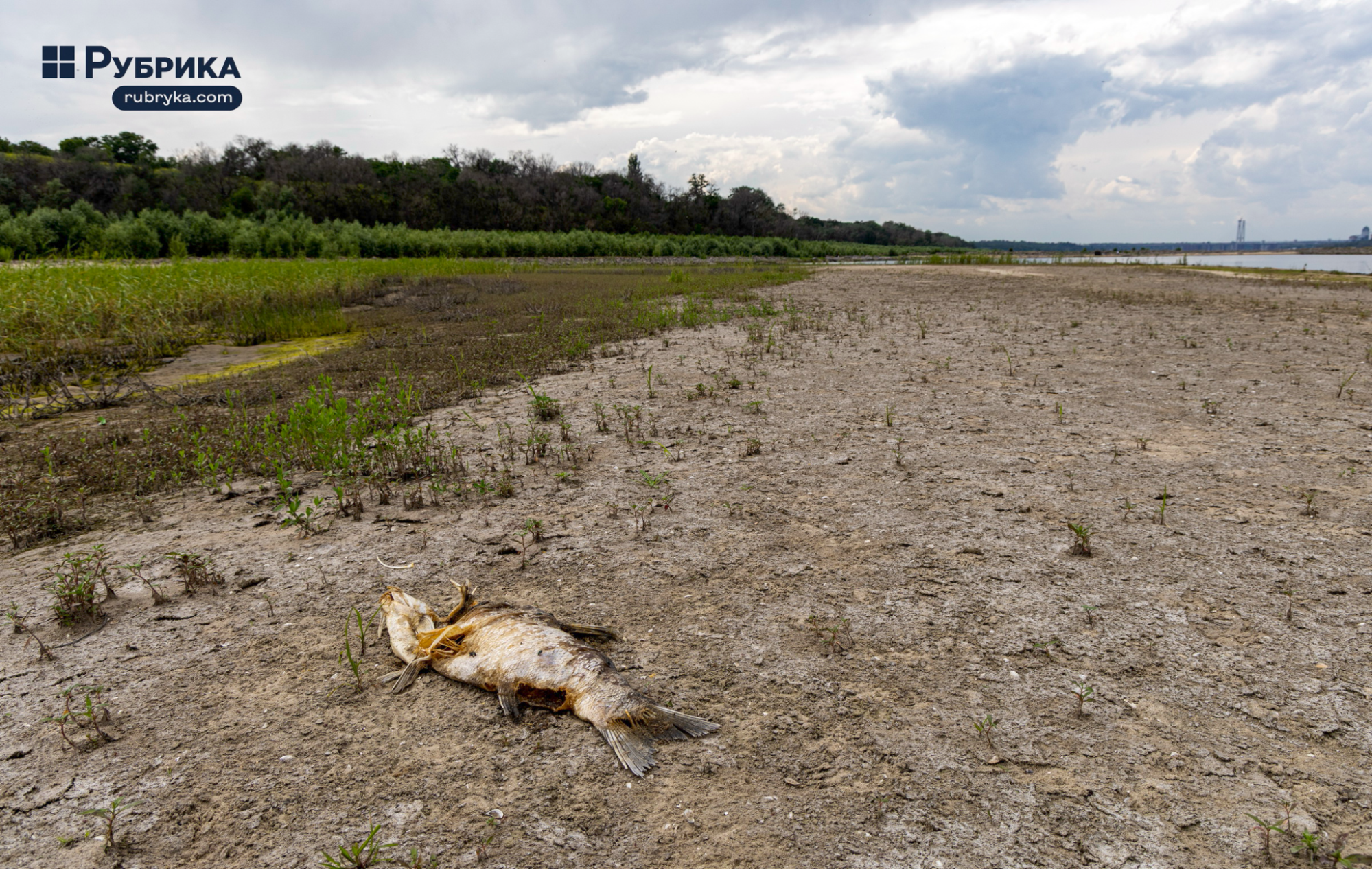
In some areas, invasive plants still linger. Water swings in isolated ponds can strand or kill big fish. But Vasyliuk says that when fish get trapped in natural pools, birds move in and feed. Not every natural process is bad. Photo credit: Viktoriia Hubareva
Drinking water is still a major problem. Mulenko says shallow groundwater in some communities is heavily mineralized, while clean artesian water lies much deeper underground. A strong well serving several villages could solve the problem. But these projects are costly, depend on external funding, and require protection against damage and theft in frontline areas. In one settlement, Mulenko says, thieves stripped part of a public water system after residents were evacuated.
That is why the scientists' biggest takeaway is not a feel-good slogan. It is a new way of understanding the land. The debate is moving past two easy extremes: either the area became a dead wasteland, or nature fixed itself on its own. Researchers are building an evidence-based picture of a system still taking shape. It shows where recovery is already working, where more help is needed, and where human intervention could do more harm than good.
That distinction will be critical when decisions are made about the future of the former Kakhovka Reservoir. Before the area is converted to infrastructure, agriculture, or even a new reservoir, planners will need to account for the value of the forest, the wetlands, fish migration routes, cultural heritage sites, and newly formed ecological corridors.
Monitoring cannot undo the destruction of the dam. But it can keep decisions from being made in the dark. That is its real value.