Rocket production, cryptocurrency services, and shadow banking network: Ukraine expands sanctions against Russia

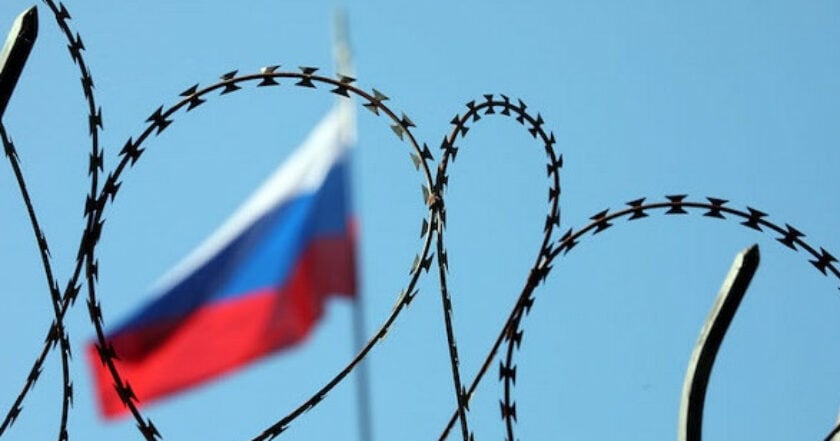
Photo: From open sources

President of Ukraine Volodymyr Zelenskyi signed decrees implementing decisions of the National Security and Defense Council of Ukraine (NSDC) to apply sanctions against Russian entities involved in ballistic missile production, individuals and companies facilitating the evasion of financial sanctions, and those acting in Russia's interests in Ukraine's temporarily occupied territories.
According to Rubryka, the Office of the President reported that the first sanctions list includes 70 Russian citizens involved in the production of the Iskander-M and Zircon ballistic missiles. Russia uses these missiles for massive strikes on Ukrainian cities and communities, resulting in civilian deaths and the destruction of civilian infrastructure.
According to figures in the statement, Russian attacks killed 153 people and injured 723 others in Ukraine in just one week. The shelling destroyed or damaged residential buildings, businesses, medical facilities, schools, kindergartens, and universities. Russia also targeted Ukrainian energy infrastructure.
To carry out these attacks, Russian forces deployed approximately 1,450 aerial bombs, over 1,640 strike drones, and 75 missiles of various types, including ballistic missiles.
In response to persistent Russian attacks, Ukraine applies not only long-range sanctions, but also restrictions against key personnel at enterprises within the Russian defense-industrial complex and chemical sector. These enterprises and specialists ensure an uninterrupted industrial cycle for ballistic missile production.
The sanctions list includes employees of:
- Votkinsk Plant and V. V. Bakhirev Institute of Mechanical Engineering
- Radar MMS, Granit-Electron, Anozit, Aviatek, Metafrax Chemicals, Altai, Nevinnomyssky Azot enterprises, and Azot
- Salyut, Strela, VNIIR-Progress, Mashinostroitel, Avangard, Sverdlov, and Morozov plants, as well as the Voskresensk Aggregate Plant
- Polyus and Submicron research institutes
All listed enterprises are already under Ukrainian sanctions. The US, European Union, UK, Switzerland, Australia, Japan, Canada, and New Zealand have also introduced partial restrictions against them.
Ukraine will now work with international partners toward full synchronization of sanctions, targeting not only these enterprises in the Russian defense-industrial complex and chemical sector, but also their key personnel.
Vladyslav Vlasiuk, Advisor – Presidential Commissioner for Sanctions Policy, explained that the new restrictions aim to cover direct participants in missile production:
"Enterprises that manufacture Iskanders and Zircons have long been under sanctions from Ukraine and most of our partners. However, specific individuals assemble these missiles: engineers, technologists, and production managers. Now we are adding them to the sanctions list as well—70 key workers along the missile supply chain, from chemical plants supplying fuel and explosive components to the assembly workshops in Votkinsk. Everyone involved in making missiles for strikes on Ukrainian cities must understand: personal accountability is unavoidable."
Another sanctions package targets individuals and companies helping Russia bypass financial restrictions. It includes 28 individuals and 27 legal entities, among them:
- Companies managing cryptocurrency exchanges
- Cryptocurrency exchange services
- Executives and owners of these structures
Sanctions were also imposed on executives and owners of companies belonging to the A7 shadow banking network, which publicly offers tools to evade financial sanctions. The US previously introduced restrictions against this network.
An additional decision imposes sanctions on 10 individuals, 21 legal entities, and two maritime vessels. According to the Office of the President, they assist Russia and act in its interests in Ukraine's temporarily occupied territories.
These entities finance Russia's unprovoked war of aggression against Ukraine and the Ukrainian people, plunder Ukrainian natural resources, and spread Russian propaganda.
Those targeted by the restrictions include collaborators who serve the aggressor, work for it, and assist the Russian occupiers.
The sanctions list also includes enterprises operating in Ukraine's temporarily occupied territories in the fields of:
- Internet and television
- Geological exploration
- Electronics and metal production
The relevant decrees implementing the NSDC decisions on personal sanctions appear on the official website of the President under numbers No. 1035/2026, No. 1036/2026, and No. 1037/2026.
Background
It should be noted that on September 13, Volodymyr Zelenskyi signed three decrees implementing NSDC decisions to apply sanctions. The restrictions target vessels in the Russian shadow fleet, enterprises and individuals linked to Russia's Rostec state corporation, and propagandists justifying Russian aggression against Ukraine.
As Rubryka reported, President Volodymyr Zelenskyi urged partners to continue strengthening sanction pressure on Russian businesses so they feel the consequences of the war and pressure the Russian leadership to end it. He emphasized that Russian businesses and oligarchs supporting the war effort must not escape the consequences of aggression.

Europe will not ease sanctions on Russia despite Trump-Putin agreements — Kallas

"Investment in war": Zelenskyi reacts to Trump's decision to allow sales of Russian fuel

UK introduces new sanctions against Russia targeting oil companies, shadow fleet tankers, and military suppliers
US senators urge Trump administration to speed up sanctions against Russia