Solutions to win: Ukrainian engineers design puncture-proof airless wheels to keep military robots moving on front lines

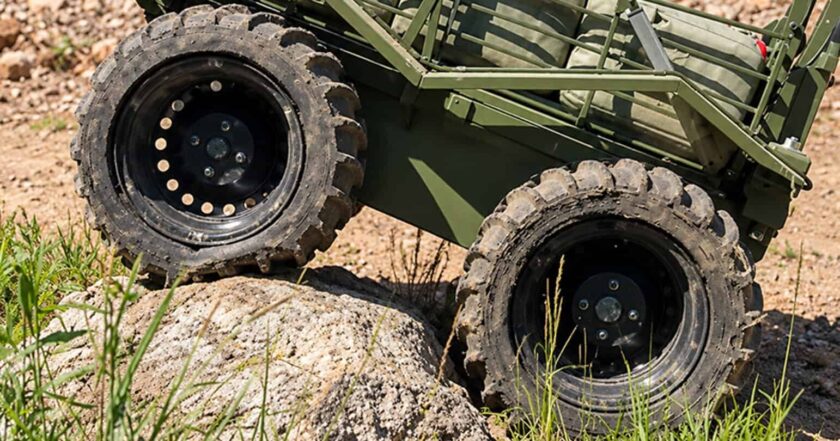
Photo source: Print&Live UA

Ukrainian developers have tested airless wheels designed for ground robotic systems operating on the front line. The design requires no inflation, tolerates mechanical damage, and boosts operational range. Manufacturers are already producing small batches and supplying them to combat units.
According to Rubryka, Print&Live UA reported the development to Militarnyi, noting that the team created the technology jointly with iSCALE 3D and external experts after successfully completing field and combat trials.
What's the problem?
Ground robotic systems operating near the line of contact risk losing mobility if their wheels are damaged. Standard pneumatic tires remain vulnerable to shrapnel, explosions, construction debris, barbed wire, and frozen ground. Consequently, punctures occur, air pressure drops, and wheels can jam entirely.
An immobilized robot in a combat zone risks loss of equipment. Moreover, evacuating or servicing a broken platform forces military personnel to intervene, exposing them to danger under enemy fire.
What's the solution?
Print&Live UA and iSCALE 3D developed airless wheels that require no internal air. They produce them using large-scale 3D printing with high-strength elastomers and composite polymers.
The design relies on an adaptive digital matrix—a lattice geometry—that enables the wheels to maintain load-bearing capacity even after partial destruction or severe mechanical damage.
Developers also redesigned the tread shape, featuring a rounded geometry and a fully enclosed wheel profile. According to the creators, this structure prevents the accumulation of dirt, stones, and ice, setting Ukrainian wheels apart from foreign counterparts with flat treads or open honeycomb structures.
How does it work?
A key advantage of the design is that it eliminates the need for tire inflation and regular maintenance. Even if damaged, the wheel continues to carry heavy loads.
Another feature is the weight-to-shape ratio. The rounded tread and light weight reduce the contact patch and rolling resistance on tough terrain. Developers state this can decrease battery drain and increase the ground robot's operational range by up to 30% compared to foreign alternatives.
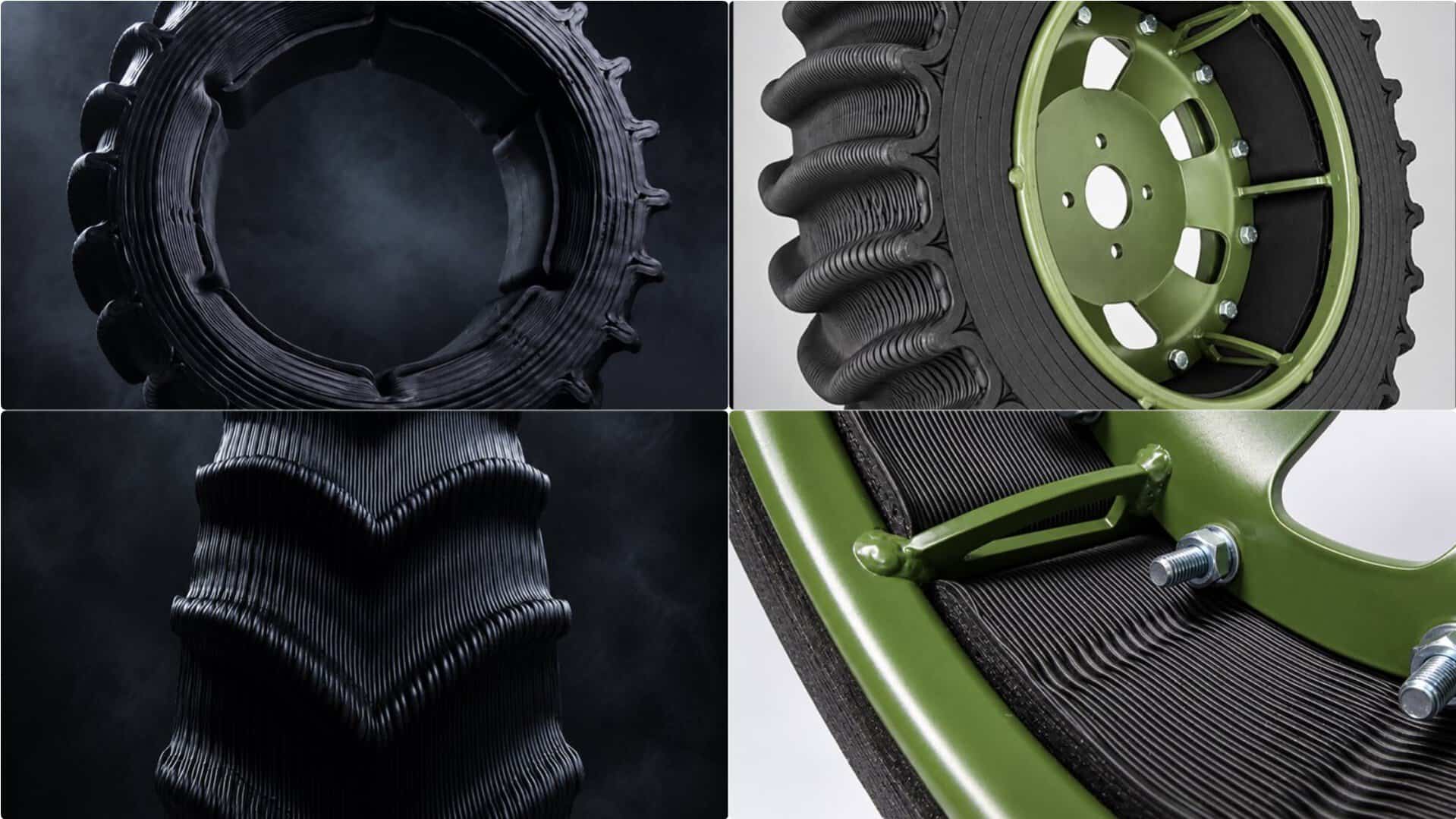
Airless wheels for ground robotic systems. Photo source: Print&Live UA
A set of Ukrainian wheels weighs 32-56 kg. In comparison, Western airless equivalents weigh between 88 and 144 kg, while standard pneumatic tires weigh 30 to 72 kg. Reducing the set's weight lowers stress on the robotic platform's gearboxes and electric drives.
The structure is also adaptable to various missions. Utilizing the Defense 3D Printing approach, developers can digitally alter rigidity, vibration damping, and wheel geometry based on the robot's purpose and weight without retooling production lines.
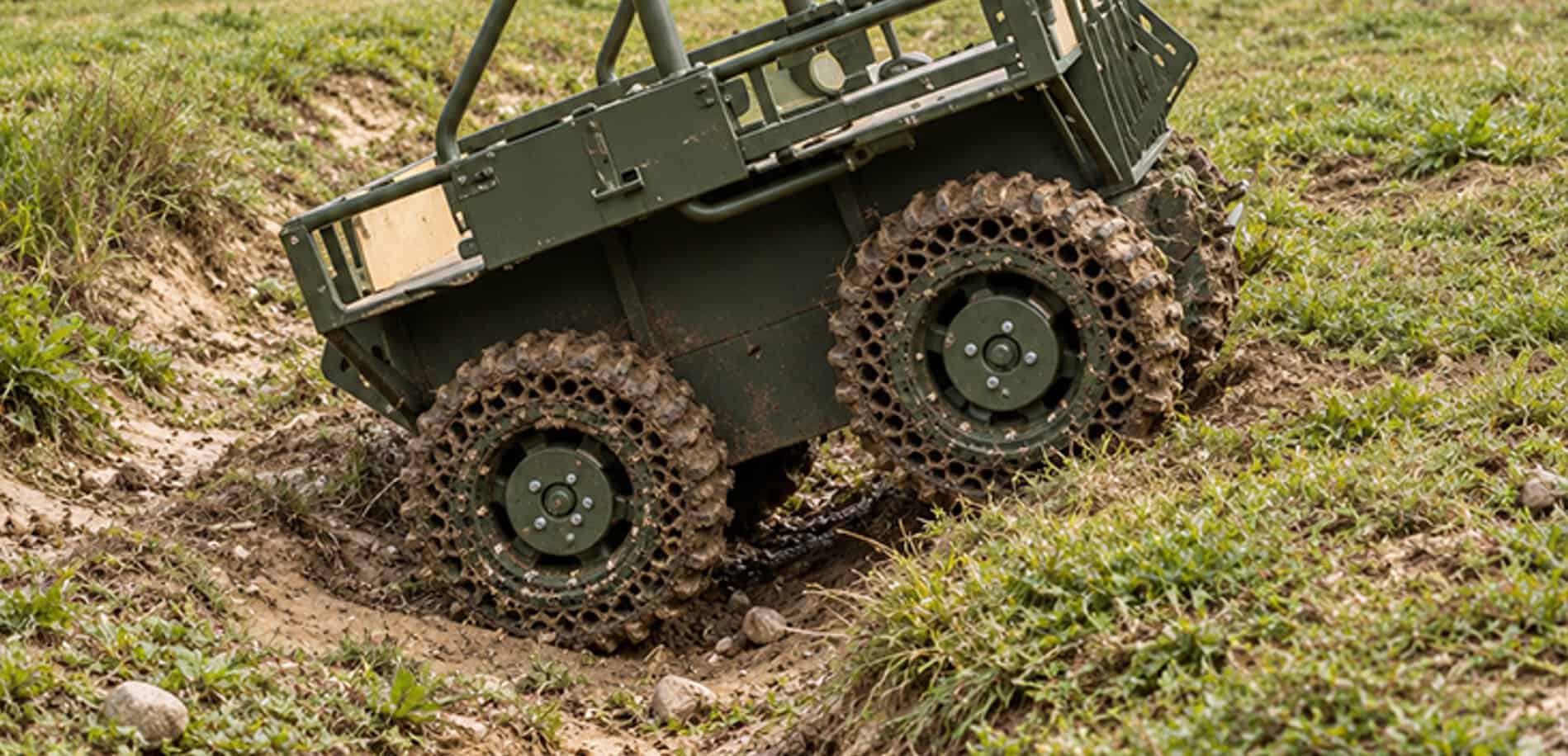
Airless wheels for ground robotic systems. Photo source: Print&Live UA
Developers specifically designed the system for field repairs. A patented two-piece rim allows soldiers to install or swap a tire without specialized equipment, such as tire changers or presses.
The development has completed its research and development (R&D) phase and is moving to small-batch production. Manufacturers now systematically deliver the wheels to combat units.
Background
It should be noted that since the beginning of 2026, Ukraine's Ministry of Defense has codified and approved 1,678 new models of weapons and military equipment for use in Ukraine's armed forces. Among them, Ukrainian enterprises manufactured 1,530 units, or 91.2%.

Solutions to win: Ukrainian interceptor manufacturer develops its own air defense network to combat drones

Solutions to win: Defense Ministry and NGO Zemliachky launch project to improve women's combat gear