Ukrainian parliament registers bill on educational rights of indigenous peoples and national minorities

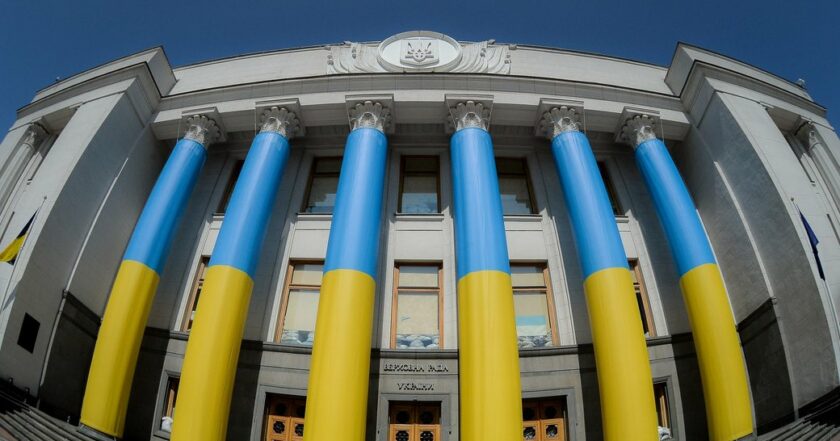
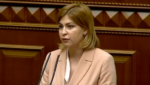
The building of the Ukrainian parliament. Photo: UNIAN

Ukrainian lawmakers registered Bill No. 16119, aimed at amending state laws to guarantee the educational rights of indigenous peoples and national minorities, announced Serhii Babak, head of the Verkhovna Rada Committee on Education, Science, and Innovation, as reported by Rubryka.
According to Babak, the legislation balances language protection with international commitments, designed to:
- Safeguard the Ukrainian language as the primary language of instruction
- Define specific rights for national minorities and indigenous peoples
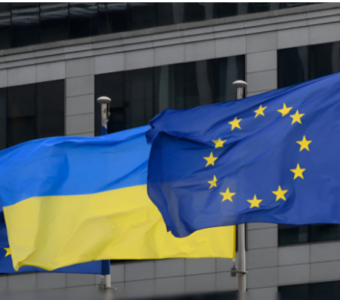
- Advance Ukraine's EU integration commitments
Babak stated that the bill aims to help unblock the opening of two negotiation clusters in Ukraine's European Union accession process following the lifting of Hungary's veto.
"Ukrainian remains the language of the educational process. The bill does not narrow its status or return the Russian language to education," Babak emphasized.
He noted that the initiative regulates the educational rights of indigenous peoples and national minorities whose native languages are official EU languages, thereby fulfilling key EU integration benchmarks.
Language use for indigenous peoples and national minorities
The bill reinforces Ukrainian as the official language of instruction while clarifying options to use official EU minority languages alongside state instruction.
Babak explained that this applies directly to students educated in minority languages:
"For example, if a school has a class where children study in Hungarian, they will be able to use the EU country's language—alongside Ukrainian—not only during lessons, but also when communicating with teachers and other participants in the educational process. Ukrainian remains the state language of the educational process, and changes apply exclusively to official EU languages."
Additionally, the bill introduces the legal status of "general secondary education institution with national minority (community) status."
To qualify for this status, at least 50% plus one student in the school must study in the language of the corresponding national minority, restricted strictly to official EU languages.
According to the Ministry of Education and Science estimates, 149 educational institutions—roughly 1.2% of all general secondary schools in Ukraine—potentially qualify, representing a targeted measure rather than a broader shift in the national educational model.
Expanding instruction in Ukrainian
The proposed legislation also permits parents to increase the number of subjects taught in Ukrainian.
Parents representing at least two-thirds of students in a class or group can submit a written request, after which the school administration makes the final determination.
Regulations for private school directors
The bill proposes relaxing state language certification requirements for a narrow group of private school directors.
Specifically, directors of private schools that operate classes or groups in indigenous or official EU minority languages will not be required to present a state Ukrainian language proficiency certificate while remaining in their positions.
According to the Ministry of Education and Science, this rule applies to administrators at 29 private schools across Ukraine.
"We found a solution that ensures the rights of national minorities without compromising the position of the Ukrainian language. We are fulfilling our obligations to Ukrainian citizens while continuing our path toward EU membership," Babak concluded.
Expected impact
The bill aims to improve educational opportunities tailored to the linguistic and cultural needs of Ukraine's national minorities and indigenous peoples, promoting multilingual education while maintaining proficiency in the state language.
Protecting national minority rights falls under Cluster 1 ("Fundamentals") of Ukraine's EU accession framework, fulfilling a requirement for advancing membership negotiations.
"Over the past two weeks, alongside parliamentary leadership, committee colleagues, and government representatives, we refined the text, defended Ukraine's position, and held additional consultations with European partners and Hungary. It turns out a reasonable compromise can be reached," Babak stated.
Background