PACE calls for using Russian state assets to pay compensation to Ukraine under ECHR rulings

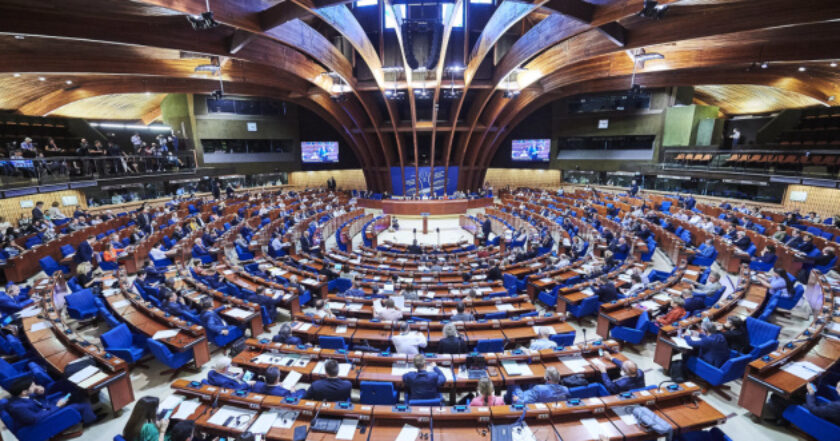

The Parliamentary Assembly of the Council of Europe (PACE) urged states to develop legal mechanisms to transfer frozen Russian state assets toward paying Ukraine compensation ordered by the European Court of Human Rights (ECHR).
PACE also proposed establishing a dedicated mechanism under the auspices of the Council of Europe to transfer these funds to Ukraine, according to Rubryka.
The Parliamentary Assembly of the Council of Europe adopted the corresponding resolution and recommendation on September 30.
"The Assembly calls on member states and observer states to immediately take the necessary legal and practical measures regarding Russian state assets under their jurisdiction. This should enable the transfer of assets to a mechanism for funding payments once the ECHR determines the compensation amount in inter-state cases brought by Ukraine against Russia concerning the war of aggression," the document reads.
PACE considers directing Russian state assets toward these payments a lawful countermeasure under international law. The resolution emphasizes that Russia must face legal consequences for its aggression and compensate Ukraine for the damage inflicted.
The ECHR has already established Russia's responsibility for severe human rights violations in two inter-state cases submitted by Ukraine. However, the court has not yet specified the exact amount of compensation.
Given the scale of damage inflicted on Ukraine, future compensation payouts could reach "tens or hundreds of billions of euros," the PACE resolution notes.
In its recommendation, the Assembly proposed creating a mechanism under the Council of Europe to receive Russian state assets allocated for Ukraine's compensation. The transferred funds will be credited as compensation owed by Russia.
According to the recommendation, this mechanism could operate independently or eventually integrate into a broader compensation fund.
PACE also urged states to enforce ECHR compensation rulings through national legal procedures, while Russia refuses to make the required payments.
"Russia has an unconditional legal obligation to comply with court judgments regarding violations committed before September 16, 2022. This obligation under international law does not diminish over time and cannot be invalidated by Russian legislation," PACE emphasized.
According to Assembly data, approximately 260 billion euros in Russian Central Bank assets were frozen following the start of the full-scale invasion, with roughly 210 billion euros held within the European Union.
Background
In late September 2025, the European Commission submitted a proposal to EU member states to leverage frozen Russian assets to back a new 140 billion euro loan for Ukraine.
However, following discussions at the European Council summit on October 23, EU leaders revised the draft conclusions, removing direct references to the EU plan to use Russian assets to provide Ukraine with financial and military support in 2026–2027.
Belgium subsequently requested broader guarantees and withheld support for the 140 billion-euro "repatriation loan" to Ukraine. As a result, the European Union postponed its decision on the use of frozen Russian assets until December 2025.
President Volodymyr Zelenskyi described the EU leaders' discussion on using frozen Russian assets to support Ukraine as a "positive signal," expecting a practical decision before the end of 2025.