Ukrainian and Czech scientists test new method for monitoring pollution in Antarctica


Photo source: Facebook / National Antarctic Scientific Center

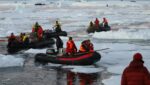
Ukrainian scientists, together with colleagues from the University of South Bohemia in the Czech Republic and the Czech Antarctic Research Program, investigated Antarctic waters for chemical pollutants. The National Antarctic Scientific Center (NASC) noted that the successful testing of the methodology enables researchers to leave such devices in Antarctic waters for longer durations in the future.
According to Rubryka, the National Antarctic Scientific Center reported on Facebook that researchers conducted the study using specialized passive samplers designed to accumulate water-dissolved organic pollutants over time.
According to scientists, these devices offer a key advantage over traditional water sampling. Through an accumulation effect, passive samplers can detect chemical compounds present in water at low concentrations or that fluctuate constantly.

Photo source: Facebook / National Antarctic Scientific Center

Photo source: Facebook / National Antarctic Scientific Center
During the previous Antarctic season, researchers deployed the traps for two weeks across two locations:
- Near Ukraine's Akademik Vernadsky station on Galindez Island
- Near the Czech field base CZ*ECO Nelson on Nelson Island.
They placed four devices near each site across freshwater bodies above and below station impact zones, glacier-fed streams, and coastal marine waters.
To submerge part of the traps in seawater, Ukraine's engineering team fabricated custom metal cubes and welded them to hold the devices.

Photo source: Facebook / National Antarctic Scientific Center
Following the experiment, researchers analyzed the samples using liquid chromatography-mass spectrometry (LC-MS). They tested for a wide range of pharmaceuticals, pesticides, PFAS (often called "forever chemicals" for their extreme resistance to degradation), and industrial chemicals.


The analysis took place at the open research facility of the South Bohemian Research Center of Aquaculture and Biodiversity of Hydrocenoses (CENAKVA).
NASC noted that virtually none of the targeted compounds were detected in the samples, except for benzotriazole, for which traces were detected. This compound is frequently used to protect metals from corrosion.

Photo source: Facebook / National Antarctic Scientific Center
Additionally, low levels of DADMAC-C10—an ammonium compound used in surfactants and disinfectants—were found in seawater from the cove near the pier at the Akademik Vernadsky station.
NASC emphasized that scientists successfully tested the methodology under Antarctic conditions, paving the way for deploying passive samplers over longer terms.


These studies will allow scientists to track long-range transport compounds and assess the environmental footprint of research stations on vulnerable Antarctic ecosystems.
Background
As Rubryka previously reported, Ukraine's Akademik Vernadsky Antarctic station and the research icebreaker Noosfera will host two new international studies under the European POLARIN program, which provides scientists access to polar research infrastructure.
Additionally, Ukrainian biologists will study how endophytes—bacteria living inside Antarctic plants—help them withstand severe frost, ultraviolet radiation, and drought, knowledge that could inform the development of bio-stimulants that enhance crop resilience.
Previously, members of Ukraine's 30th Antarctic expedition and a seasonal team delivered more than 3,000 different samples to Ukraine, mostly collected during the Antarctic summer season. The majority of these samples were marine bacterioplankton, totaling over one thousand specimens.
On February 6, 2026, Ukraine will mark the 30th anniversary of receiving the Antarctic station from the United Kingdom. In anticipation of this milestone, Akademik Vernadsky researchers have published archival materials documenting the beginning of Ukraine's presence in Antarctica.

Ukrainian artists donate penguin mosaics to Akademik Vernadsky Antarctic station

Vernadsky station polar explorers open photo exhibition about Russia's war in Ukraine
Ukraine's Noosfera icebreaker arrives at Vernadsky Research Base