"Connecting Inner Landscapes": How Estonian residency program is supporting Ukrainian artists during the war


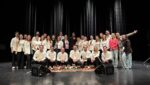
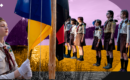
Opening of the group exhibition Loor. Connecting Inner Landscapes in Tallinn, Estonia. Photo credit: Marlene Leppänen

Eight Ukrainian artists presented works shaped by Estonia's landscapes, communities, and cultural heritage in the group exhibition Loor. Connecting Inner Landscapes in Tallinn, Estonia. The exhibition was the culmination of a residency program organized by LOORE – Estonian Creative Residencies Network.
Rubryka looks into how the residency program supported Ukrainian artists and how their experiences in Estonia shaped an exhibition about memory, displacement, and connection.
What's the problem?
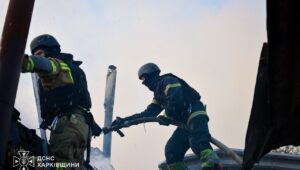
Russia's full-scale war has disrupted the lives and work of Ukrainian artists, writers, and other cultural professionals. Many have been forced to leave their homes and rebuild their professional lives in unfamiliar surroundings. For those who remain in Ukraine, constant insecurity and the destruction of cultural infrastructure make it difficult or even impossible to continue their work.
According to Ukraine's Ministry of Culture, Russian attacks have damaged or destroyed more than 4,500 cultural sites and facilities, including 1,990 architectural and cultural heritage sites and 2,625 cultural infrastructure institutions. Against this backdrop, artist residencies have given Ukrainian creatives precisely the things the war has taken away: time and space to work. Estonia is among the countries providing that support.
What's the solution?
LOORE – Estonian Creative Residencies Network, which unites 21 creative residencies across Estonia, launched a program offering Ukrainian artists, writers, and cultural workers a temporary place to live and work away from the immediate pressures of war.
"The main goal of the program was to bring together the resources and expertise of the LOORE network members to provide Ukrainian artists and creative professionals with a safe and supportive environment for artistic creation," Evelyn Grzinich, head of LOORE and initiator and coordinator of the program, told Rubryka. "We wanted to provide a place where they could continue their creative practice while also offering opportunities to build meaningful connections — both within the LOORE network and with the broader Estonian and international creative communities."

Evelyn Grzinich, head of LOORE – Estonian Creative Residencies Network. Photo courtesy of LOORE
LOORE launched an open call for eight spots and received more than 200 applications. Each participating residency then selected a creative professional based on their CV, portfolio, and motivation letter.
"We did our best to make the selection process as fair and objective as possible," said Grzinich. "But choosing only eight participants from such a pool of applicants was incredibly difficult."
The eight selected participants were:
- Visual artists Apl315 and Tania Bakum
- Land artists Bohdan Lokatyr and Marharyta Zhurunova
- Filmmaker Daryna Mamaisur
- Composer Anna Leonova
- Composer and musician Make Like a Tree
- Writer Olha Svyripa
"Each artist had their own story, challenges, and reasons for applying, but they all shared a need for a safe space where they could focus on their creative work," added Grzinich.
How does it work?
The residencies lasted around eight weeks and covered travel, accommodation, studio access, and a two-month stipend. Depending on the host residency, participants also had access to workshops, tools, materials, instruments, libraries, and other facilities. Arvo Pärt Center Creative Residency, Copper Leg Residency, Creative City Artist Residency, Estonian Literary Society, KORDON Art Residency, MASSIA, Muhu Art Residency, NART, and TYPA Residency were the hosts.
The program also encouraged exchange with local communities. At KORDON Residency, for example, writer and translator Olha Svyripa spoke to schoolchildren in Kärdla about her work and Ukrainian culture. At Copper Leg Residency in Vaskjala, land artists Bohdan Lokatyr and Marharyta Zhurunova presented works created during their residency at an open studio event.

Ukrainian artist, curator, and cultural organizer Viktoria Berezina. Photo courtesy of LOORE
The works created were later brought together at ARS Project Space in Tallinn, curated by Ukrainian artist, curator, and cultural organizer Viktoria Berezina, who is based in Tartu, Estonia.
The exhibition, held from July 17 to August 8, 2026, brought together visual art, land art, film, sound, and writing. Some works responded directly to Estonia's natural environment and found objects, while others explored sound, memory, war, loss, and displacement.


According to Berezina, the exhibition title "Loor. Connecting Inner Landscapes" refers to the internal worlds that people carry with them.
"During their residencies, the artists found themselves in a new country, surrounded by a different cultural and natural environment, while carrying with them the memories, experiences, and inner landscapes of Ukraine," Berezina said. "The exhibition explores this process — how personal memory enters into dialogue with place, and how art becomes a bridge between cultures, experiences, and people."


For Berezina, the project was also a form of cultural exchange between Ukraine and Estonia. The residency allowed the artists to continue their practices while introducing Estonian audiences to contemporary Ukrainian culture.
"I hope visitors leave with a sense of closeness and mutual understanding," Berezina said. "Despite our different languages, biographies, and experiences, we are connected by the same human needs — the desire to have a home, to preserve memory, to feel connected to nature, and to find hope even in difficult times."
What's next?
The LOORE network has been offering residencies to Ukrainian artists and creative professionals since 2023. The current residency program was funded by Nordic Culture Point and the Estonian Ministry of Culture, while the Cultural Endowment of Estonia supported the exhibition. The participation of writer Olha Svyripa was co-supported by the Culture Moves Europe program, funded by the European Union and implemented by the Goethe-Institut.
According to Grzinich, funding for the current program is secured until the end of 2026.
"As a non-profit network, we do not have permanent funding, so we cannot yet say what will happen beyond this year. We are actively working to secure support that will allow us to continue providing a safe and inspiring environment for Ukrainian artists and cultural professionals as long as needed," said Grzinich.